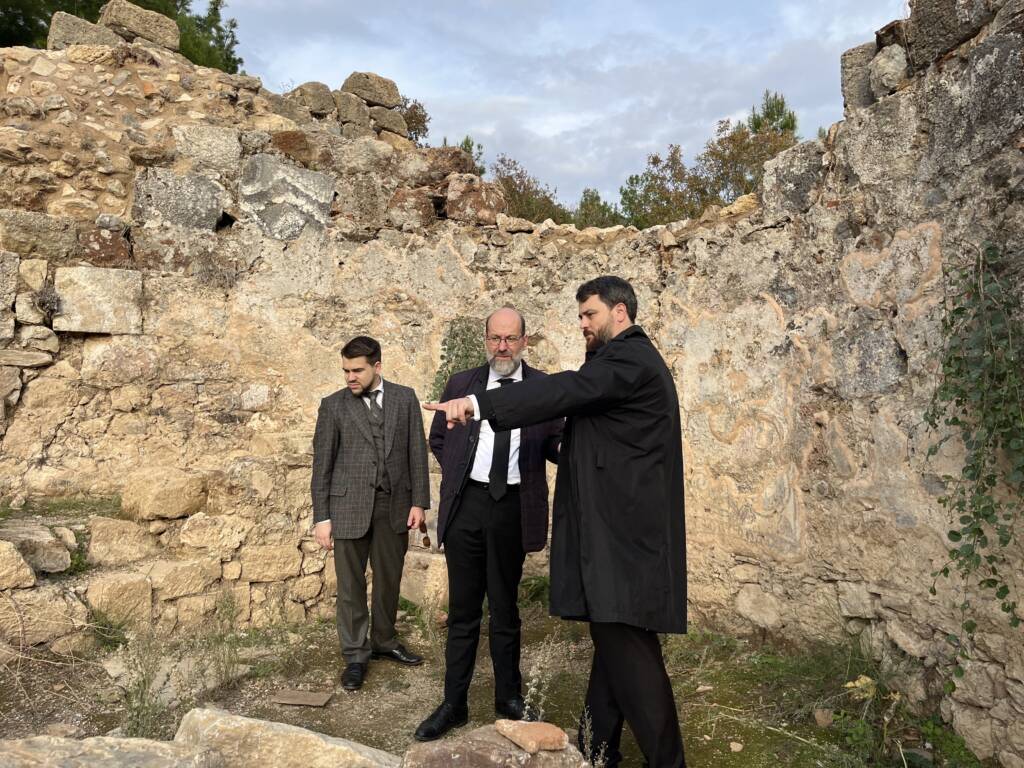
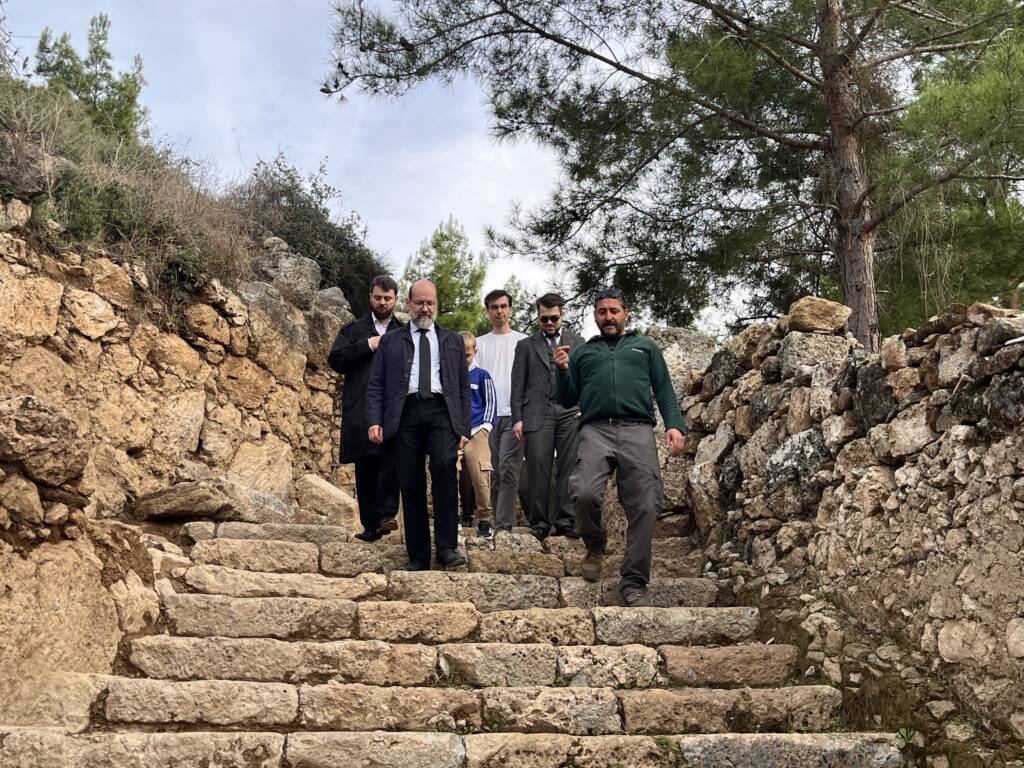
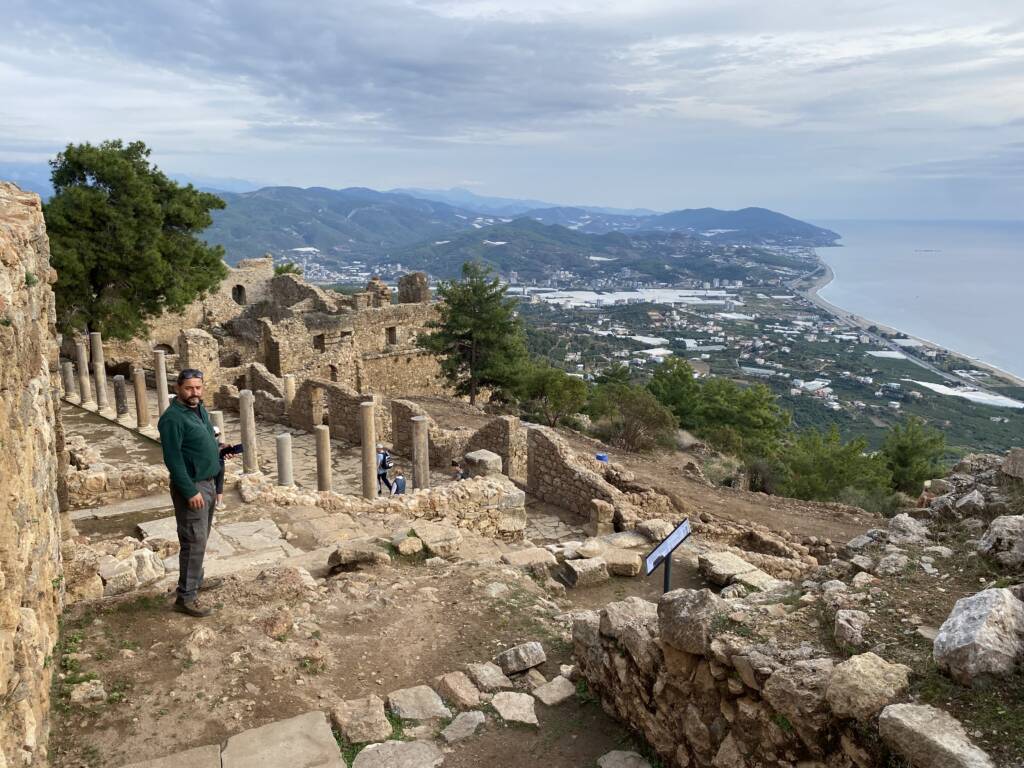
Situated approximately 20 km east from Alanya, on the summit of a hill, 400 meters above sea level, Syedra was located at the intersection of Pamphylia and Cilicia in Antiquity, and at one point, was also included in the Isauria region. Claudius Ptolemaeus mentions Syedra as one of the coastal cities belonging to the province of Pamphylia, stating that mountainous Cilicia began from Syedra, while Stephanus of Byzantium (6th century) includes Syedra in his list of cities of Isauria.
Syedra was settled in the 9th century BC, and abandoned in the 13th century CE. Christianity having spread very early in Pamphylia following the preaching of the holy apostles Paul and Barnabas, Syedra became an episcopal see. Bishop Nestor of Syedra participated in the first ecumenical council of Nicaea (325).
Following this council, the city was greatly tormented by the heresy of the Pneumatomachi, also known as Macedonians, who denied the divinity of the Holy Spirit. It might be that the bishop of Syedra and the metropolitan of Side in Pamphylia were sympathetic to the Pneumatomachi. Perhaps for this reason Matidios, Tarsinos, Neon and Numerianos, presbyters of the Church in Syedra, as well as Palladios, a monk living in the same city, opted to write to Saint Epiphanios of Cyprus, the island just opposite, asking him to “to expound the belief in the Holy Trinity” and “clarify texts for [their] Church and to expound the correct and sound faith through a more expansive explanation, in order to strengthen and to make secure through [his] sacred writings the simpler who are in doubt about the faith”. In response to their enquiry, the later wrote his work Ancoratus (The well anchored man) as a reply letter to the presbyters of Syedra “who strive after a good zeal and the blessed and much-beloved life” and “who chose the orthodox faith and the perfect concord”.
At the Fourth Ecumenical Council of Chalcedon (451), Syedra was represented by Bishop Gaius. The city experienced a period of prosperity beginning in the second half of the 4th century and the 5th century during which several churches were built. In 691-692, Bishop George of Syedra attended in Constantinople the Council in Trullo, sometimes called the quinisext council. The bishopric of Syedra appeared as the ninth on the lists of bishoprics of the metropolis of Side of Pamphylia, which mention it until the 12th century.
Some travelers who visited the cities of Pamphylia and Cilicia stopped by Syedra in the 18th and 19th centuries and provided information about its location, such as Beaufort in 1817 or Barker in 1853. In 1891-1892, Heberdey and Wilhelm examined several inscriptions belonging to this important port city. In 1939, E. Honigmann who worked on the lists of bishops at the ecumenical councils of Nicaea and Chalcedon mentioned the bishops of Syedra.
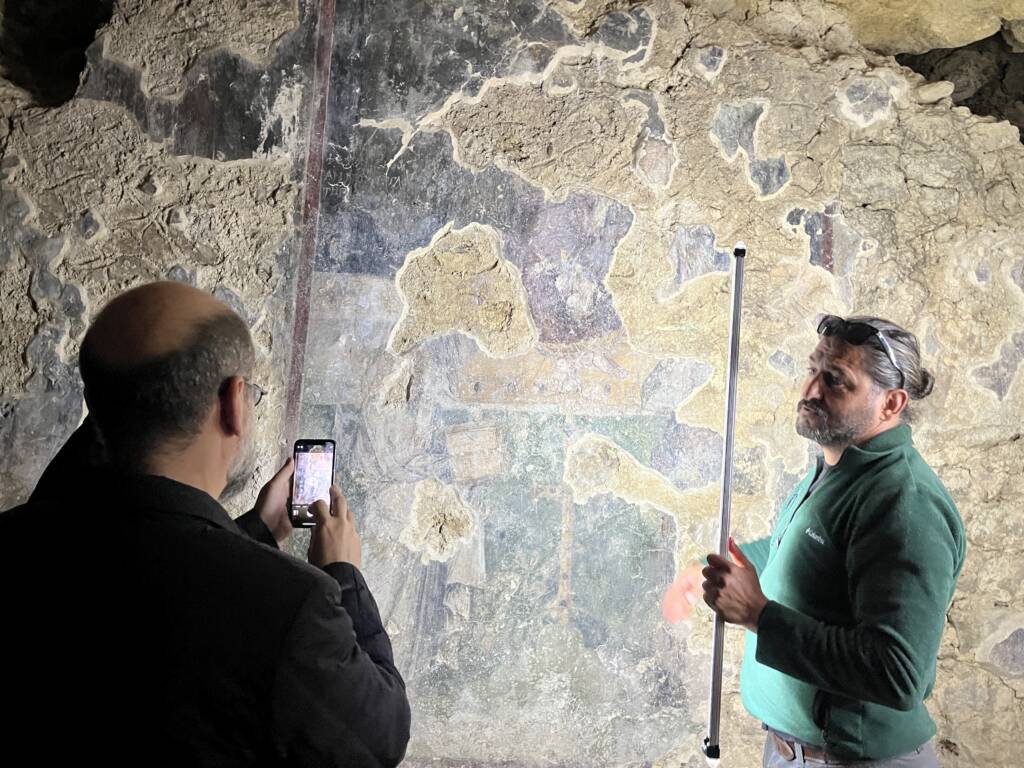
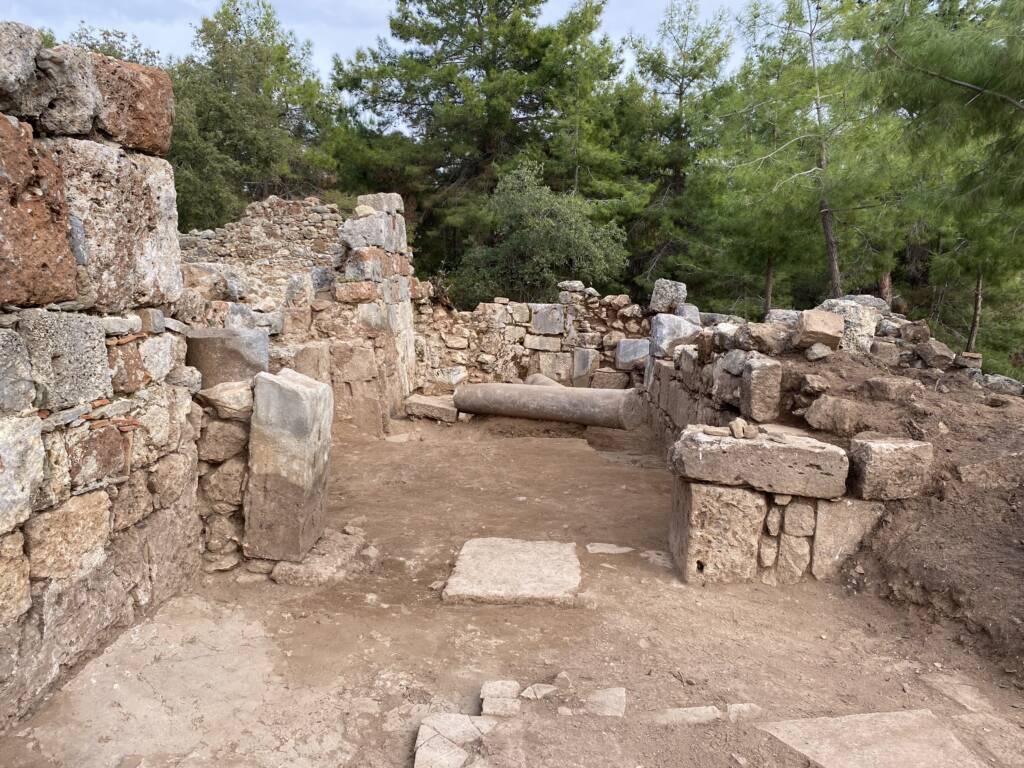
Between 1994 and 1999, under the direction of the Alanya Archaeology Museum, excavations were carried out in the city, particularly focused on the colonnaded street. After 20 years since the first excavations in Syedra, excavations resumed in 2019 with the permission of the General Directorate of Cultural Heritage and Museums of the Ministry of Culture and Tourism of the Republic of Turkey, and continue without interruption to this day under the direction of Assoc. Prof. Dr. H. Ertuğ Ergürer of Alanya Alaaddin Keykubat University, uncovering several churches as well as a baptistery cave featuring the Holy Apostle Paul on a fresco believed to date back to the 5th to 7th centuries. Research is continuing intensively to let the stones speak and allow us to know and understand better the history of this important ecclesiastical center of our Holy Metropolis.